
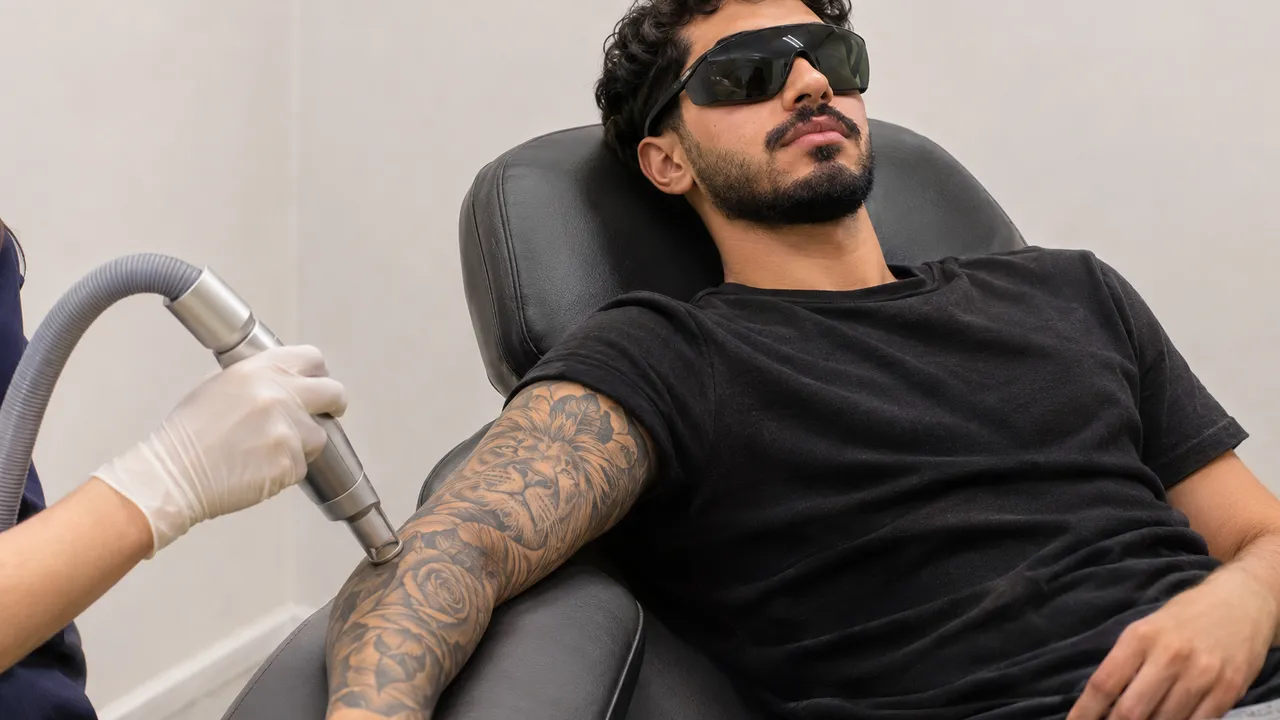
The Cleveland Clinic defines the treatment this way: "Tattoo removal is a procedure to remove permanent ink from your skin. If you have a tattoo that you don’t want any longer, your healthcare provider might suggest a type of tattoo removal, like laser therapy."
The cause and effect run in a line. Ink sits in the skin, a method acts on it, and your skin has to recover. Each step is a place where a question helps.
Four articles, from first visit to method
Read these in order if you are only starting to think about removal.
- Questions asked at a tattoo removal consultation shows what the first appointment is for.
- Finding a doctor for tattoo removal is about choosing who does the work.
- Laser, dermabrasion and excision for tattoos compares the methods side by side.
- Risks of at-home tattoo removal is for anyone tempted to skip the clinic.
Questions to ask before you agree
- Which method do you suggest for my tattoo, and why?
- Who will perform it, and what are their credentials?
- What should my skin look like during recovery?
Where the official sources point
These pages are worth reading alongside these notes. Start with NewYork-Presbyterian's health library entry on tattoo removal. The American Society of Plastic Surgeons has both a page on tattoo removal risks and safety and a general tattoo removal overview. For a general reference, there is also Wikipedia's tattoo removal entry.
Next step
Open the consultation article and copy its questions onto your phone. Then book the consultation, not the procedure.